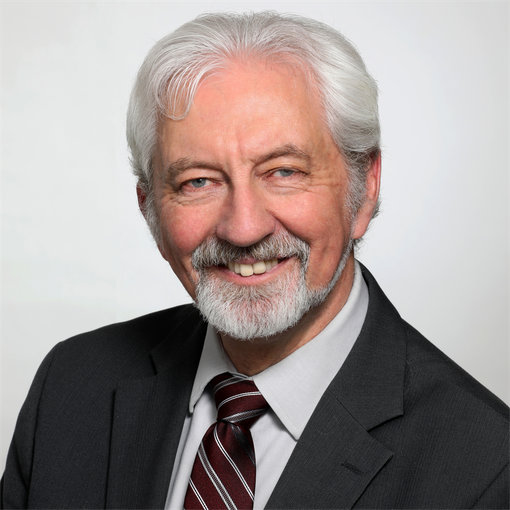
CHP warns of trend to fascism in abuse of and by human rights commissions
January 25, 2008
LANGLEY, BC; Jan. 25, 2008 (CHP) — “If any magazine, journalist, or political
party can be told by a government agency what it may or may not say, Canada will
become a fascist state,” warns Ron Gray, leader of the Christian Heritage Party
of Canada.
He was speaking about recent ‘human rights’ complaints against Maclean’s
magazine, author Mark Steyn, former Western Standard publisher Ezra
Levant—and the federal political party he leads.
The CHP, the sixth-largest of Canada’s 16 registered federal political
parties—next in size after the Green Party—with its leader have been targeted in
three complaints made to the Canadian Human Rights Commission by an Edmonton
man.
Those complaints cite articles on the CHP web-site that oppose same-sex
“marriage” and other aspects of the “gay rights” agenda.
Ironically, the first of the complaints was about an article not written by the
CHP, but by an American Internet news service, WorldNetDaily.com; that article
reported extracts from legal and sociological commentaries in the quarterly
Law Review published by Regent University of Virginia in April, 2002.
However, the complaint from Rob Wells of Edmonton to the CHRC didn’t come until
December, 2007—more than four and a half years after the CHP had posted the
report.
For 20 years, the CHP has maintained a policy that says:
“It should be beyond the power of any legislative or administrative body to
recognize, affirm, condone or discriminate in favor of identifiable sexually
aberrant individuals or groups.”
That policy underlies the CHP’s opposition to same-sex “marriage” and other
legal recognition given to homosexuals in recent years, says Gray.
“While our policy is rooted in our commitment to biblical principles,” he adds,
“there are sound secular reasons for it as well:
“The science is now very clear that homosexuality is not innate—every
study that ever claimed to have found a ‘gay gene’ was discredited by subsequent
peer review.
“Dr. Jeffrey Satinover—who taught psychiatry at Yale and is past president of
the CJ Jung Psychological Institute—says homosexuality is a behavioral addiction
whose nearest analogue is alcoholism: the more it is indulged, the stronger the
addiction becomes.1
“The 1973 decision by the American Psychiatric Association to delete
‘homosexuality’ from its Diagnostic and Statistical Manual—a decision
that was far more political than medical, coerced by pressures including threats
of physical violence made by homosexual advocates during the APA’s 1973
convention in San Francisco2 —has been repudiated by
subsequent surveys of practising psychiatrists: a 1977 survey found that 69
percent of psychiatrists in North America still regard homosexuality as a
treatable mental illness3; in a later survey
covering both North America and Europe, 73 percent of psychiatrists agreed.4
“And a 2000 study in Vancouver, published in the Journal of the Canadian
Medical Association and in the International Journal of Epidemiology,
showed that the life expectancy of homosexual men is dramatically less than that
of heterosexual men—from 8 to 20 years less; the life expectancy of a homosexual
man in Canada in 2000 was about the same as the life expectancy of all men in
Canada in 1871!5
“If journalists, politicians and educators continue to tell children ‘It’s OK to
be gay,’ some of those children will be tempted to experiment; if they
experiment, some will become addicted—and if they become addicted, those
journalists, politicians and educators will be responsible for condemning those
children to a miserable, short life and an early grave.
“That’s why the CHP opposes such legislation as the Liberals’ legalization of
same-sex ‘marriage’—which their Justice Minister promised Parliament in 1999 the
Liberal government would never enact,” says Gray.
He said the CHP published the WorldNetDaily article in 2002 because it contained
information vital to the on-going public policy discussion about the “gay
rights” agenda.
“We felt then, and still feel, that the public is entitled to see the
information from those academic studies,” Gray said.
A GROWING THREAT
Gray listed sampling of recent cases in which human rights commissions have
penalized Canadians for exercising their right to freedom of speech and
expression—rights which are supposedly protected in the Charter of Rights and
Freedoms:
• Most recently, Mark Steyn and Maclean’s magazine were the subject of a
yet-to-be-adjudicate complaint for reprinting a chapter from Steyn’s book
America Alone.
• Ezra Levant, founder and formerly publisher of Western Standard magazine, is
currently being investigated by the Alberta HRC in connection with a complaint
about his magazine publishing Danish cartoons depicting the Muslim prophet,
Mohammed.
• Catholic Insight magazine is currently the subject of a complaint to
the Canadian Human Rights Commission for material on its website critical of
homosexual conduct.
• Steven Boissoin, a Christian pastor, faces punishment by the Alberta Human
Rights Commission for a letter published in the Red Deer Advocate. The
adjudicator alleged a “circumstantial causal connection” between his letter and
an unrelated attack on a homosexual teenager in that city.
• John Di Cecco, a Kamloops city councilor, was fined $1,000 for by the BC Human
Rights Tribunal when a complaint was brought in response to comments he made
about homosexual conduct.
• Knights of Columbus of Port Coquitlam, BC, were fined by the BC Human Rights
Tribunal in 2005 for refusing the use of their hall for a lesbian “wedding”
reception.
• Bishop Fred Henry of Calgary was the subject of a human rights complaint in
2005 for articulating the Catholic Church’s teachings on same-sex marriage in a
pastoral letter. (The complaint was later withdrawn after a meeting with the
complainants, and substantial expense.)
• In 2002, the Saskatchewan Human Rights Commission ordered the Saskatoon
Star-Phoenix and Hugh Owens to each pay $1,500 to three complainants because
of the publication of an advertisement that quoted Bible verses on
homosexuality. Four years later, this was overturned by the Saskatchewan Court
of Appeal after the court ruled that the message, though offensive, didn’t reach
the level of inciting hatred.
• Bill Whatcott, charged with spreading hate against homosexual persons for the
distribution of material objecting to an advertisement that ran in
Saskatchewan’s largest newspaper for homosexuals, Perceptions, seeking
boys for activities that specifically mentioned that their age was “… not so
relevant”. The material distributed by Mr. Whatcott also objected to material
promoting “gay” culture and beliefs entering into the Saskatoon Public School
System and the University of Saskatchewan. The appeal by Mr. Whatcott to the
Saskatchewan Court of Queen’s Bench from his conviction and fine of $17,500.00
by the Saskatchewan Human Rights Tribunal was denied by the Judgment of Mr.
Justice F. Kovatch in a decision received on December 11, 2007.
• Chris Kempling, a teacher and counsellor at a public high school in Quesnel,
was cited in May 2001 for “conduct unbecoming a professional” by the BC College
of Teachers for letters published in a local newspaper during the summer. As
punishment he was suspended from teaching for one month. He appealed his
suspension all the way to the Supreme Court of Canada, which in 2006 refused to
hear his appeal.
CBC radio interviews in 2004 about his private practice as a counselling
psychologist in Prince George were made the basis for a formal reprimand by the
Quesnel School District; when Dr. Kempling complained to the BC Human Rights
Tribunal that his liberties were being infringed, the Tribunal refused to hear
his complaint.
Dr. Kempling was also penalized by his employer, the Quesnel School District,
for a letter to the editor of his local newspaper announcing his candidacy for
the CHP, and stating the CHP’s long-established policy on government approval of
homosexuality.
• In 1999, Toronto printer Scott Brockie was ordered by the Ontario HR
Commission to pay a ‘gay’ activist group $5,000 for refusing to print their
letterhead.
Gray also commented on the political effect of the complaints against him and
the CHP.
“Of course, such allegations probably hurt us politically in the short term,”
Gray said. “The complainant grossly misrepresents us as ‘bigots’—which we’re
not; but we understand that’s part of the give-and-take of a debate about public
policy.
“But activists who want to use the power of the state to silence arguments they
can’t answer don’t accept such a free interchange of ideas.
“Such attempts to use government authority to silence opponents are the very
essence of fascism.”
FOOTNOTES
1—J. Satinover, Homosexuality and the Politics of Truth
(Baker Books, Grand Rapids, MI, 1996) pp 31-40
2—R. Bayer, Homosexuality and American Psychiatry: The
Politics of Diagnosis (New York: Basic Books, 1981) pp 102-146;
3—”In 1973, the American Psychiatric Association decided to
remove homosexuality from its list of psychiatric disturbances. But, in 1977, a
survey of American psychiatrists (cf. Lief, H. I., “Sexual Survey 4: Current
Thinking on Homosexuality”, Medical Aspects Of Human Sexuality, 11 [1977]
110-111) revealed that 69 percent of them continued to think that homosexuality
was a pathological adaptation and not a normal variation.”
— http://www.familytofamilies.com/scienceand.pdf
4—(Stanton L. Jones, Ph.D., Provost of Wheaton College, and Mark
A. Yarhouse, Ph.D., Homosexuality: The Use of Scientific Research in the
Church’s Moral Debate, pp. 97-98)
5—Robert S. Hogg et al., “Modeling the Impact of HIV Disease on
Mortality in Gay and Bisexual Men”, International Journal of Epidemiology
26 (1997): 65
=30=
Contact: Ron Gray (604) 534-3319
The facts behind three CHRC complaints filed against the CHP, its
Skeena EDA, & Ron Gray
Jan. 24, 2008 — The story behind this case actually begins in
California in 2000, when the two co-editors of The Stanford Law
Review decided to devote an edition to legal issues surrounding the
‘gay’ agenda . They solicited articles from more than a dozen recognized
legal and sociological authorities representing both sides of the issue;
but when the Review was published in Spring, 2001 it contained
only the politically correct pro-’gay’ essays. One of the co-editors had
censored the articles that questioned the validity of the ‘gay’ agenda.
The other co-editor took the excluded essays to Regent University Law
School in Virginia, proposing that they be published in the Regent
Law Review in order to present “the other side” of the issue to
legal scholars and the interested public.
The Regent Law Review published those essays in April, 2002; when
that issue of the Regent Law Review and the story behind it came
to the attention of WorldNetDaily (the world’s largest independent
Internet news site), they ran a story which summarized some of the
censored essays. In the interests of balanced journalism, before
publishing the story WND showed it to PFLAG (Parents and Friends of
Lesbians and Gays) and GLAAD (Gay and Lesbian Alliance Against
Defamation)—and their comments were included in the story.
When I read that story on WorldNetDaily, I felt the information was
important to the public policy debate raging in Canada (this was still
before Parliament had passed Bill C-250, the ‘hate crimes’ amendment to
the Criminal Code, or Bill C-38, legalizing same-sex ‘marriage’). So I
reproduced the WorldNetDaily story on the Christian Heritage Party’s
web-page. That story was also reproduced on the web-page of the CHP’s
Skeena Electoral District Association (EDA).
From its inception, the CHP has had a policy which states:
“It should be beyond the power of any legislative or
administrative body to recognize, affirm, condone, or discriminate in
favor of identifiably sexually aberrant individuals or groups.”
The CHP remains the only federal political party in Canada
that opposes same-sex “marriage” or civil unions, and/or teaching
children that homosexuality is “normal” or “an acceptable alternate
lifestyle.” We contend that, since homosexual behaviour shortens life
expectancy by as much as 20 years (some experts say more), it is
demonstrably unhealthy, and its recognition and acceptance should not be
promulgated in schools or by public events like “Gay Pride” parades.
Publishing the WND article on the CHP web-page was merely a means of
making articles by experts available to the Canadian public, to provide
academic support for our long-established policy.
I first learned of the three complaints by an Edmonton activist in
December, 2006 when the CHP’s Skeena/Bulkley Valley Electoral District
Association faxed me a copy of a letter they had received from the
Canadian Human Rights Commission, informing them that a complaint had
been filed against them for reproducing the WND article (from the CHP’s
main web-site) on the Skeena EDA web-site. Subsequently, in January,
2007, I was informed by the CHRC that the same man had also filed
complaints against the CHP National Office; and against me, personally.
As National Leader of the CHP, I exercise editorial authority (with the
assistance of the CHP’s Publications, Communications and Education
Committee) over everything published by the Party.
The first contact was an invitation by the CHRC mediator for us to enter
into mediation with the complainant. I contacted the mediator and said I
could alter my travel schedule to come to Edmonton for mediation on Feb.
26, 2007. The CHRC mediator, Mr. Bob Fagan, said he would contact the
complainant and let me know.
By Feb. 19, the day when I had to leave for meetings of the CHP National
Board in Lethbridge, Alberta, I had not yet heard from Mr. Fagan; so I
called him to say that it was now too late to re-schedule my travel. I
asked that he and the complainant propose an alternate date for
mediation, and said I would try to accommodate them to the extent that
my work and travel schedule allowed. I asked permission to have an
observer from the Skeena EDA accompany me.
To this date, I have not heard back from either of them.
At the same time—Feb. 19, 2007—I wrote to Mr. Richard Tardif, Deputy
Secretary-General of the CHRC, telling him that I do not recognize the
jurisdiction of the CHRC over a registered federal political party, and
asking him to explain why he thought the CHRC would have such
jurisdiction.
To this day, I have not had any response from Mr. Tardif.
The next communication from the CHRC was June 7, 2007, when Mr. Michel
Paré, Director of Alternative Dispute Resolution Services Division of
the CHRC, informed me that “since both parties have refused mediation”,
the case was being turned over to Investigations Branch. (It would seem
to me that if the complainant has rejected mediation, the complaint
should be dropped.)
I wrote to Mr. Paré, reviewing the history of the three complaints, and
correcting his misunderstanding that I or the CHP had rejected mediaton.
We were (and are) willing to enter mediation, but have heard nothing at
all from the mediator. I also sent him a copy of my letter to Mr.
Tardif, raising the issue of jurisdiction.
I received a letter from Mr. Paré, dated June 29, 2007, simply stating
that the complaints had been referred to the Investigations Division.
However, June 25 the Skeena EDA of the CHP had already received a letter
from an investigator for the CHRC—which they faxed to me. I called the
investigator and explained to her that I had not received answers to
any of my communications with the CHRC, and that I was still
ready to meet with the mediator. She told me they had previously
experienced similar difficulties with the Mediation Branch, and she
asked that I fax her copies of all the previous correspondence—which I
did. .
The next communication I received from the CHRC was an e-mail from the
investigator—dated June 25, 2007, but only received by ExpressPost at my
home in Langley, BC on July 13, 2007—asking me four questions. I replied
that I did not believe I should ‘attorn to jurisdiction’ by answering
her questions, until the issue of jurisdiction had been settled.
I have told the investigator that if the complainant truly feels that we
are motivated by hate, he should file his complaint with the RCMP under
Sec. 319 of the Criminal Code.
I had also mentioned to the mediator, when speaking to him Feb. 19, that
it seems to me an abuse of the Canadian Human Rights Act to use
it as a weapon with which to censor ideas with which one disagrees; his
response was astonishing:
“The Human Rights Act is about censorship!” he answered.
I have retained a lawyer—Mr. Ron McDonald of Lethbridge, AB—who has
prepared an extensive brief and forwarded it to the CHRC investigator.
____________________________________________
To interview National Leader Ron Gray:
Phone: 1-888-868-3247
Email: NationalOffice@chp.ca
|